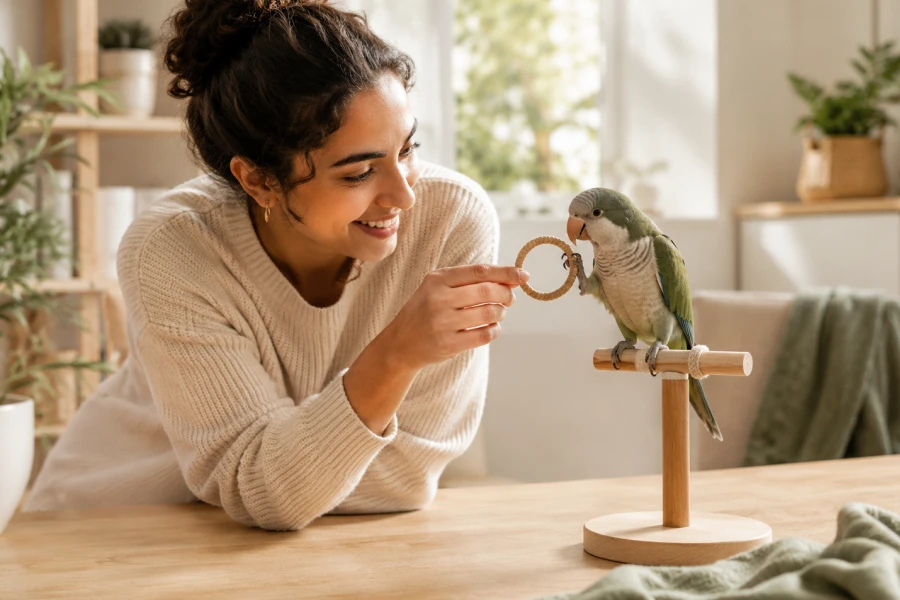
Teach parrot tricks with patience, and practice becomes a bonding ritual. Many owners imagine fast results. Real progress usually comes through tiny steps. Parrots learn best when they feel safe. They respond to timing, repetition, and motivation. A trick should never feel like a demand. It should feel like a shared game. The best sessions are short and positive. Your bird stays curious when pressure stays low. That attitude makes learning more reliable.
Teach Parrot Tricks by turning one big behavior into small actions. A wave may begin with lifting one foot. A spin may begin with following a target. A fetch behavior may begin with touching an object. Each tiny success deserves quick reinforcement. This method keeps the bird from feeling confused. It also helps you see progress clearly. A practical parrot trick training plan gives sessions direction. You can repeat steps until they feel easy. Then you can add difficulty slowly. Confidence grows from simple wins.
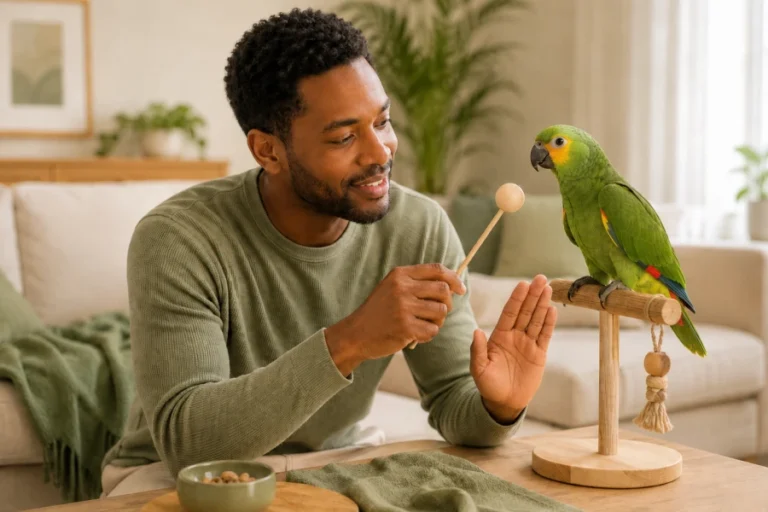
Rewards are personal for parrots. One bird may love sunflower seeds. Another may prefer head scratches. Some birds work for toys or excited praise. You should test options before serious practice begins. Watch which reward creates focus. Use tiny portions for food rewards. Keep sessions healthy and balanced. Rotate rewards when interest drops. Motivation changes across the day. The best reward is the one your bird values now.
Teach Parrot Tricks more successfully when cues stay consistent. Use the same word or gesture each time. Avoid repeating the cue too often. Wait for the response calmly. Reward the closest correct action. Then shape it over several sessions. Too much talking can confuse the bird. A helpful clear cue practice system keeps commands simple. The bird learns faster when signals are predictable. Your consistency becomes part of the lesson.
Teach Parrot Tricks carefully so excitement does not become chaos. Some birds scream when they want rewards. Others nip when overstimulated. Stop before energy becomes too high. Keep practice calm and brief. Reward the behavior you want repeated. Ignore harmless attention-seeking when possible. Redirect unsafe behavior gently. Avoid turning mistakes into dramatic moments. Birds remember big reactions. Quiet consistency teaches better choices.
Trick practice works best when it fits your home. You do not need a special studio. A quiet table, perch, or stand can work well. Remove distractions before starting. Keep treats nearby. Practice when your bird already seems alert. Avoid sessions during stress, hunger, or fatigue. A structured daily bird enrichment approach blends training with routine. Learning becomes part of life. That makes progress easier to maintain.
Teach Parrot Tricks because the process builds understanding. The finished trick is only one benefit. You also learn timing, patience, and observation. Your bird learns trust and cooperation. Both sides become better communicators. Keep sessions playful. Stop when the bird succeeds. Return later with the same calm energy. Teach parrot tricks as a conversation, not a performance. The relationship becomes stronger than the trick itself.

Leave a comment