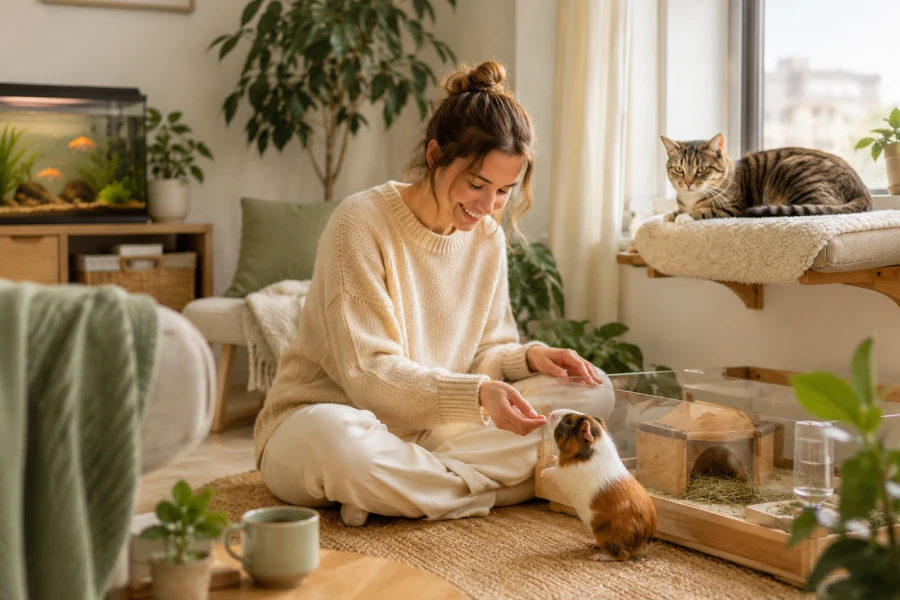
Choosing the best indoor pets is about more than liking cute animals. Your home size matters. Your schedule matters too. Noise, cleaning, allergies, and daily attention all shape the decision. Some pets thrive with quiet routines. Others need play, handling, and constant interaction. The right match can make a home feel warmer. The wrong match can create stress quickly. A smart choice begins with honest expectations. That is why indoor pet planning deserves careful thought before adoption.
Modern homes often require flexible pet choices. Many people live in apartments, shared spaces, or compact houses. They want companionship without overwhelming their routines. Smaller animals can bring joy without needing outdoor space. Birds, cats, rabbits, fish, reptiles, and guinea pigs all suit different lifestyles. Each option has a unique care rhythm. A helpful pet-friendly home planning resource makes comparison easier. You can weigh time, cost, and temperament together. That prevents emotional decisions from becoming daily frustration. Good planning protects both you and the animal.
Space is only one part of the decision. A quiet studio may suit a cat better than a noisy bird. A family room may work beautifully for a calm rabbit. Fish tanks need stable placement and regular water care. Reptiles require controlled heat and lighting. Guinea pigs need room for safe movement. Every animal brings a different kind of responsibility. You should also think about neighbors, children, and cleaning tolerance. The best choice respects your real environment. Comfort grows when care feels realistic.
Best Indoor Pets can look different for every household. Busy workers may prefer pets with predictable routines. Children may enjoy animals that respond gently to interaction. Retirees may want companionship with more daily bonding. Some pets need morning and evening attention. Others need shorter care moments done consistently. A detailed indoor pet comparison helps families avoid guessing. It also shows where responsibilities can be shared. Everyone should understand feeding, cleaning, and handling rules. That shared clarity keeps enthusiasm from fading.
Best Indoor Pets still need stimulation. Indoor life should not mean boredom. Cats need climbing, hunting games, and cozy hiding places. Birds need safe toys, sound, and social contact. Rabbits need chewing outlets and supervised exploration. Small mammals enjoy tunnels, textures, and gentle variety. Fish benefit from stable tank design and low stress. Reptiles need habitat quality more than constant handling. Enrichment turns basic care into a better life. Happy pets usually behave better inside the home.
Your personality matters as much as the pet’s. Some owners love interactive animals. Others prefer peaceful observation. A talkative bird may delight one person and exhaust another. A nocturnal pet may not fit a light sleeper. A shy rescue cat may need patience before affection appears. These details matter after the first week ends. A strong small pet care strategy helps you prepare emotionally. You can plan routines before problems start. That makes the adoption feel calmer. The relationship becomes more respectful from the beginning.
Best Indoor Pets bring the most joy when expectations are clear. You should research feeding, housing, grooming, and social needs first. Then compare those needs with your daily energy. Do not choose only by cuteness. Consider noise, mess, cost, and lifespan. Ask who will handle care during busy weeks. Prepare the home before the animal arrives. Keep early routines simple and steady. The best indoor pets make home life richer when chosen thoughtfully. A confident start creates a better bond.



Leave a comment