
A pet grooming schedule helps owners replace guesswork with calm routine. Many grooming problems begin with delay. Mats appear. Nails grow too long. Shedding spreads through the home. Ears, paws, and skin get ignored. A schedule makes care feel manageable. It also helps pets understand what to expect. Routine reduces resistance because grooming becomes familiar. The best schedule fits the animal, not a generic calendar. Consistency keeps care easier all year.
A Pet Grooming Schedule works because small tasks stay small. Brushing removes loose hair before tangles tighten. Nail checks prevent discomfort and slipping. Ear checks can reveal irritation. Coat checks may uncover bumps, fleas, or dryness. Pets also learn that grooming is normal. A reliable pet care calendar helps owners remember each task. Regular attention saves time later. It can also reduce professional grooming stress. Prevention feels quieter than emergency care.
Different pets need different grooming rhythms. Long coats may need brushing several times weekly. Short coats may need quick weekly checks. Cats may need help during shedding seasons. Dogs vary widely by breed and coat texture. Rabbits need careful brushing, especially during molts. Small pets need clean habitats and safe handling. Reptiles have different skin and shedding needs. The schedule should respect biology. Copying another pet’s routine can create problems.
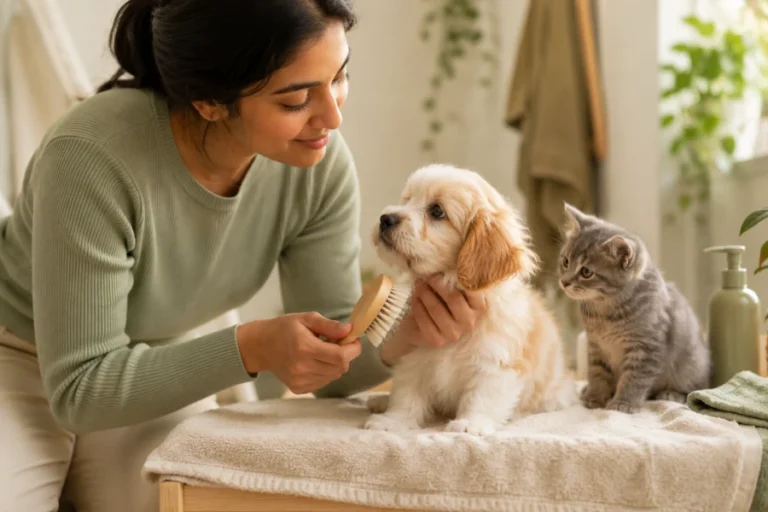
Pet Grooming Schedule planning should fit real life. Owners often fail when routines feel too large. Break grooming into small tasks. Brush on Monday. Check nails on Wednesday. Clean ears or eyes during weekend care. Add reminders until habits become automatic. Keep supplies in one easy spot. A useful busy owner grooming system reduces mental clutter. Small routines are easier to repeat. Repetition creates confidence for you and your pet.
A Pet Grooming Schedule should change with seasons. Shedding may increase in spring and fall. Winter can dry skin and paws. Summer may bring more outdoor dirt, pests, and odor. Humidity can worsen mats in thick coats. Travel can disrupt routines. Illness can change grooming tolerance. Senior pets may need gentler sessions. Keep the schedule flexible without abandoning structure. Seasonal adjustments make care more realistic. Pets benefit when routines respond to life.
AI tools can make grooming easier to remember. You can ask for a weekly task list based on pet type. You can track brushing, nail checks, baths, and professional appointments. You can create reminders for seasonal coat changes. You can also record reactions after each session. A smart AI grooming planner helps patterns become visible. Still, you should adjust advice to your pet’s comfort. Tools support consistency. They do not replace observation. Your pet’s behavior remains the final signal.
A Pet Grooming Schedule should feel supportive, not punishing. Start smaller than you think necessary. Add tasks as confidence grows. Reward cooperation generously. Stop sessions before frustration builds. Review the routine every month. Adjust frequency when coat, age, or health changes. Ask groomers or vets for specialized advice. A pet grooming schedule succeeds when it becomes ordinary. Simple habits make fur days easier.



Leave a comment