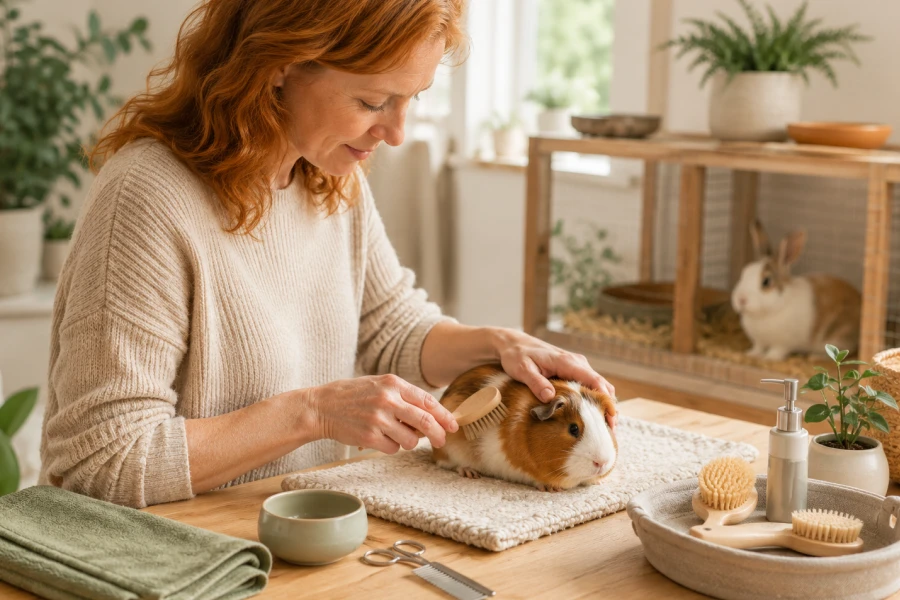
A small pet grooming routine can be easy to overlook because tiny animals seem self-sufficient. Many small pets groom themselves often. That does not mean owners can ignore care. Rabbits, guinea pigs, hamsters, and other small companions need observation. Their coats, nails, teeth, and skin can change quickly. Handling must also be gentle and species-aware. A good routine protects comfort without creating stress. It helps owners notice problems earlier. Small pets deserve the same thoughtful care as larger animals. Routine makes that care safer.
A Small Pet Grooming Routine should begin with species-specific needs. Rabbits require careful brushing, especially during shedding. Guinea pigs may need nail trims and coat checks. Hamsters usually need less handling but still need observation. Some small pets should never be bathed casually. Others need bedding changes to stay clean. A reliable small animal grooming plan prevents unsafe assumptions. Tiny bodies can become stressed quickly. Gentle methods matter. Knowledge keeps care safer.
Small pets often fear sudden grabbing. Their bodies are delicate. Their stress signals can be subtle. Before grooming, practice calm handling. Support the body properly. Keep sessions low to the ground when possible. Use soft towels when appropriate. Reward calm behavior with favorite foods. Stop if breathing or movement becomes frantic. Safe handling makes every grooming task easier.
A Small Pet Grooming Routine should include coat, nail, and skin checks. Long-haired guinea pigs need more brushing than short-haired ones. Rabbits may need extra help during heavy sheds. Nails can grow too long and affect movement. Skin issues may hide under dense fur. Owners should look for bald spots, flakes, swelling, or parasites. A practical gentle small pet care process makes checks less intimidating. Regular observation supports early action. Small problems are easier to address early. Grooming becomes health awareness.
A Small Pet Grooming Routine should include the habitat. Bedding quality affects coat and skin. Damp bedding can cause odor and irritation. Dirty corners can stain fur. Dusty materials can bother breathing. Food debris can attract pests. Clean habitats reduce grooming problems before they begin. Habitat care and body care work together. Owners should schedule both tasks consistently. A cleaner space helps small pets stay healthier.
Some grooming tasks need expert support. Nail trims can feel difficult with tiny paws. Mats close to skin can be dangerous to remove. Dental concerns require veterinary attention. Sudden hair loss should not be ignored. A stressed pet may need a different handling approach. Owners should not force risky tasks. A supportive pet grooming timing resource can help identify next steps. Professionals can teach safer methods. Asking early prevents harm. Small pets benefit from careful decisions.
A Small Pet Grooming Routine should be gentle, brief, and repeatable. Choose the same quiet area when possible. Keep tools simple. Handle the pet calmly. Check coat, nails, skin, and movement. Clean the habitat on schedule. Record changes that seem unusual. Adjust care during shedding or illness. A small pet grooming routine works best when it feels calm. Tiny animals thrive when care stays consistent.



Leave a comment