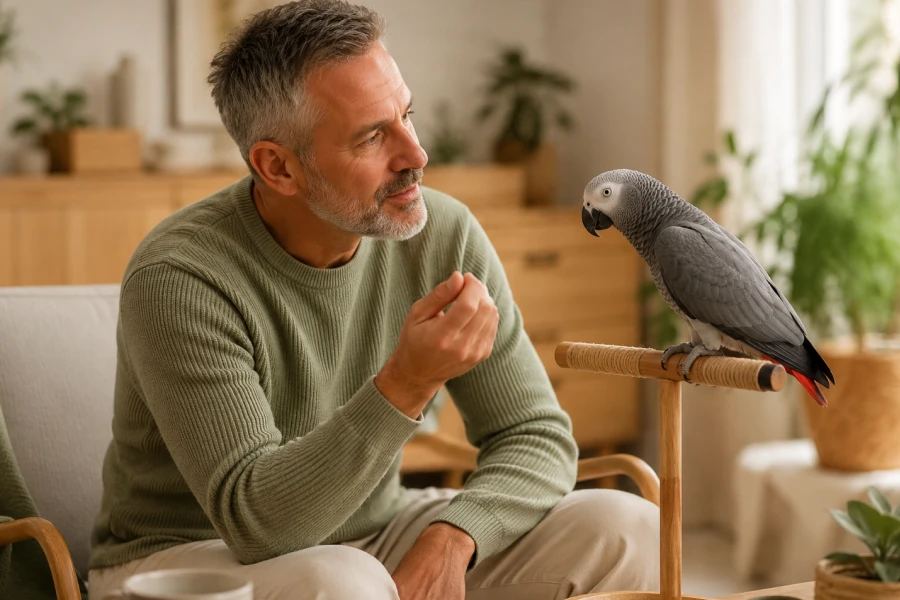
Parrot communication training helps owners understand what their bird is already saying. Communication is not limited to words. A parrot speaks through posture, sound, movement, and routine. Owners often focus only on talking ability. That can miss the deeper relationship. A quiet bird may communicate clearly through body language. A noisy bird may be asking for structure. Training creates shared signals that reduce confusion. It also makes daily care easier. Better communication starts with better attention.
Parrot Communication Training starts before you teach any cue. You need to observe what your bird does naturally. Notice sounds linked to hunger, boredom, fear, or excitement. Watch how posture changes around people and objects. Track when biting or screaming happens. Patterns reveal causes. A focused parrot communication plan makes those patterns easier to record. Listening turns random behavior into useful information. That helps you respond more calmly. Calm responses support better learning.
Many parrots can mimic speech. Some use words in meaningful contexts. Others prefer whistles, gestures, or specific sounds. Owners should not measure intelligence only by vocabulary. A bird that never talks can still communicate beautifully. Training should honor the individual bird. You can build cues around natural strengths. A whistle may become a recall signal. A head movement may show choice. Communication improves when expectations stay flexible.
Parrot Communication Training can make handling much safer. Step-up practice becomes easier when the bird understands the cue. Returning to a cage feels less stressful when routines are clear. Grooming, travel, and vet visits also benefit from communication. You can teach cooperative behaviors gradually. Each skill reduces fear during necessary care. A practical safe handling routine supports both bird and owner. Trust grows when the bird knows what comes next. Predictability prevents many defensive reactions. Safer handling begins with clearer signals.
Parrot Communication Training helps the whole household respond consistently. Birds become confused when every person reacts differently. One person may reward screaming accidentally. Another may punish fear behavior. Mixed signals can slow progress. Family members should agree on cues and rewards. They should also understand warning signs. Keep instructions simple enough for everyone. Use the same words, gestures, and timing. Consistency makes the bird feel secure. Harmony improves when humans communicate too.
AI tools can support communication training by organizing notes. You can log sounds, triggers, rewards, and daily moods. You can ask for pattern summaries after several days. You can request simpler session ideas when progress stalls. Still, observation must stay personal. A tool cannot feel your bird’s tension. It cannot replace your relationship. A helpful smart bird training assistant works best as a tracker. You provide the judgment. Technology provides structure.
Parrot Communication Training becomes strongest through ordinary moments. Say cues calmly during feeding. Watch body language during play. Practice choice-based interactions during short sessions. Reward quiet confidence. Avoid turning communication into constant testing. Give your bird time to answer. Respect signals that ask for distance. Build skills slowly across weeks. Parrot communication training makes ownership feel less mysterious. A smarter bond grows from respectful repetition.


Leave a comment