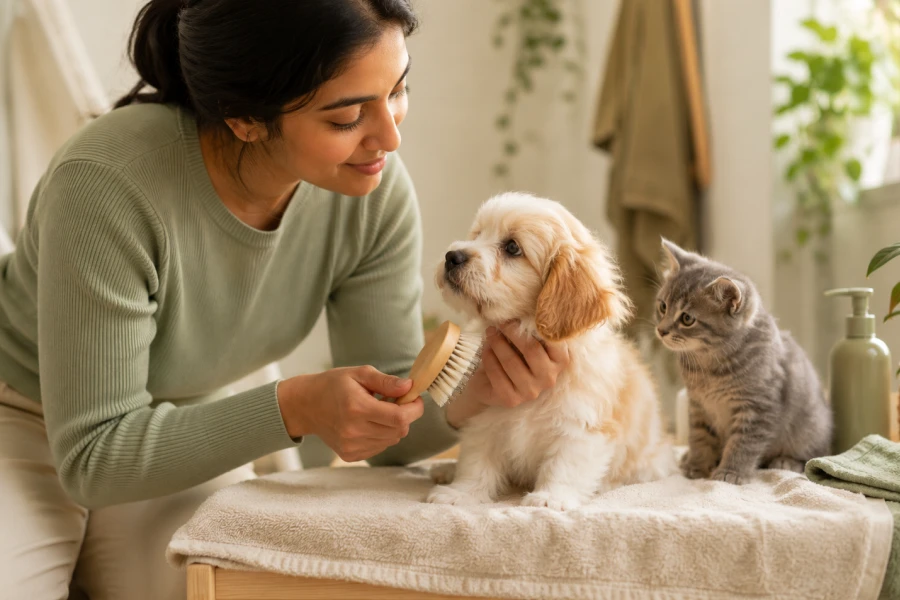
Knowing when to start grooming pets can change the entire care experience. Grooming is not only about appearance. It teaches touch, patience, comfort, and trust. Many owners wait until the pet looks messy. That delay can make grooming feel strange or scary. Early exposure helps animals accept handling calmly. It also helps owners notice health changes sooner. The right timing depends on species, age, coat, and temperament. A gentle start prevents future battles. Grooming works best before problems become urgent.
When to Start Grooming Pets matters because habits form quickly. Puppies, kittens, rabbits, and small pets learn from first experiences. A rough brushing session can create resistance. A calm touch routine can build trust. Early grooming should feel light and brief. The goal is comfort before perfection. A clear early pet grooming plan helps owners begin safely. It shows when to introduce brushes, nail handling, and coat checks. Small steps make later care easier. Timing shapes the pet’s emotional response.
Touch should come before serious grooming tools. Many pets need to accept hands first. You can gently handle paws, ears, tail, and chin. Keep each moment short. Reward calm behavior quickly. Stop before the pet becomes overwhelmed. Tools should appear gradually. Let the pet sniff brushes or combs. Pair the sight of tools with good things. Comfort with touch creates comfort with grooming.
When to Start Grooming Pets depends strongly on coat type. Long-haired pets need earlier brushing practice. Curly coats can mat quickly without routine care. Short coats may need less brushing but still need handling. Cats may resist grooming if introduced too late. Small mammals need species-specific caution. Some pets need professional grooming earlier than owners expect. A helpful coat care timing resource can clarify priorities. Coat needs should guide the schedule. Prevention is easier than fixing mats.
When to Start Grooming Pets also affects veterinary care. Pets that accept handling usually tolerate exams better. Paw touching supports nail checks. Ear handling supports infection checks. Mouth handling supports dental awareness. Gentle grooming prepares animals for necessary care. This reduces fear during appointments. It also helps owners notice concerns earlier. Grooming becomes part of health monitoring. Early practice makes medical care less dramatic. A calm pet is easier to help.
Age matters, but temperament matters too. A bold puppy may accept tools quickly. A nervous kitten may need slower steps. A rescue pet may carry unknown experiences. Small animals may panic with rough handling. You should adjust pace to the individual. Progress should feel steady, not forced. A practical gentle grooming routine supports sensitive pets. Patience prevents fear from becoming habit. The pet’s response should guide every session. Safety matters more than speed.
When to Start Grooming Pets is usually earlier than owners think. Begin with gentle handling before full grooming is necessary. Introduce tools slowly. Keep sessions short and positive. Reward calm behavior. Match timing to coat, species, and personality. Ask professionals when coat care feels complicated. Build routine before mats, overgrown nails, or fear appear. When to start grooming pets becomes easier when you think preventively. Early kindness creates lifelong cooperation.




Leave a comment