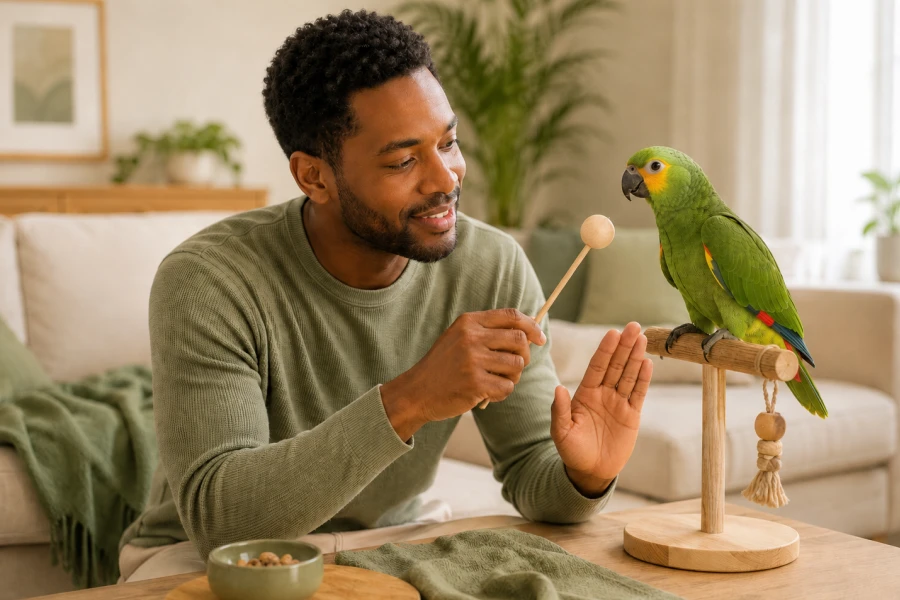
Parrot training helps owners turn curiosity, sound, and movement into communication. Parrots are intelligent animals with strong emotional responses. They notice tone, timing, and routine. They also learn from reactions quickly. A bird that screams for attention may simply need structure. A bird that avoids hands may need slower trust-building. Training should never feel harsh. It should feel consistent, clear, and rewarding. When owners understand the process, daily life becomes calmer. The bond grows through small repeated wins.
Parrot Training works only when trust comes first. Birds are prey animals, so pressure can backfire quickly. A rushed hand approach may create fear. A loud correction may increase noise. Calm repetition teaches safety better than force. You can begin with presence, gentle voice, and predictable movement. A structured bird training routine keeps lessons organized. Trust grows when the bird controls some distance. That choice makes learning less stressful. Confidence becomes the foundation for every skill.
Your parrot communicates before any trick begins. Feathers, posture, eyes, and beak movement all matter. A relaxed bird learns faster. A tense bird needs space. Owners often miss early stress signals. That mistake can turn training into conflict. Watch for leaning away, rapid movement, or defensive biting. End sessions before frustration appears. Short lessons protect enthusiasm. Good observation prevents many behavior problems.
Parrot Training can support speech, tricks, and daily handling. Each goal needs small steps. A bird may first learn to target a stick. Then it may step toward your hand. Later it may step up calmly. Word practice works best with repetition and context. Tricks should feel playful, not demanding. A useful parrot behavior support system helps owners track progress. Clear steps reduce confusion. Your bird learns what actions earn rewards. Progress feels more natural when lessons stay simple.
Parrot Training improves when rewards are meaningful. Some birds love tiny treats. Others prefer praise, toys, or attention. Timing matters more than reward size. Mark the exact behavior you want. Then reward quickly. Avoid punishing mistakes during practice. Mistakes show where the step was too difficult. Break the task into smaller pieces. Celebrate progress before expecting perfection. Positive sessions keep the bird eager to participate.
AI can help organize training ideas. It can suggest session plans, progress trackers, and troubleshooting questions. Still, your eyes matter most. A tool cannot replace direct observation. You should use technology to support consistency. Keep notes about triggers, rewards, and successful moments. A practical AI pet training tool can make patterns easier to notice. Then you can adjust sessions intelligently. The bird remains the real teacher. Technology simply helps you listen better.
Parrot Training becomes powerful when practiced gently every day. You do not need long sessions. Five focused minutes can teach more than a stressful half hour. Keep rewards ready. Watch body language closely. End on a successful moment. Repeat familiar skills before adding new ones. Give your bird time to process. Parrot training should create cooperation, not control. When lessons feel safe, connection becomes the real result.


Leave a comment